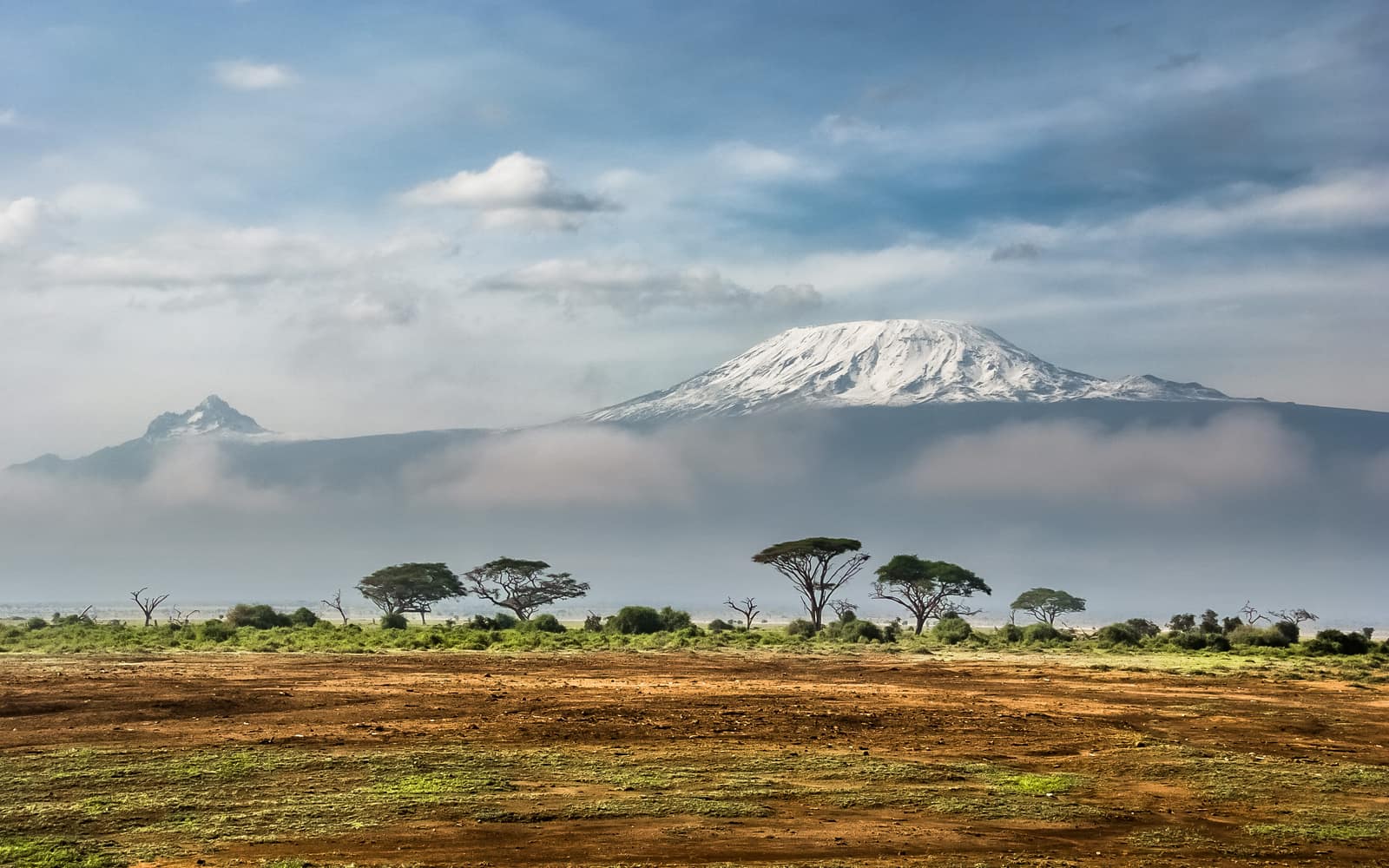
Overview
The Machame Route — nicknamed the Whiskey Route — is the most popular path to Uhuru Peak on Kilimanjaro, chosen by more than 35% of all Kilimanjaro climbers each year. It is more challenging than Marangu but rewards that extra effort with dramatically better scenery, a superior acclimatization profile, and a summit experience most climbers describe as the best of their lives. This is a full camping route — no huts — passing through five distinct ecological zones: equatorial rainforest, open moorland, alpine desert, arctic summit zone, and the glacial summit itself. The 7-day version follows the exact same route as the 6-day through every ecological zone and every landmark. The critical difference is Day 4: after tackling the Barranco Wall and arriving at Karanga Camp for lunch, the day ends there rather than continuing on to Barafu. That single additional overnight at roughly 4,000 metres adds a full night of acclimatization, and lifts the summit success rate to approximately 85–90%, compared to roughly 80% on the 6-day. "The 7-day Machame is the version I recommend for the majority of clients who choose this route," says Priscus Peter Mtui, our lead guide and owner. "The extra night at Karanga Camp gives your body a genuinely important additional acclimatization night before the summit push. The 6-day version is achievable for fit, well-prepared climbers, but if this is your first time at altitude, or you simply want the best possible chance of standing on Uhuru Peak, seven days is the honest recommendation." Pricing depends on group size: $2,150 per person solo, $1,799 for two, $1,749 for three to four, and $1,699 per person for groups of five or more — all figures include park fees and are all-inclusive on the mountain. Tipping isn't mandatory but is customary and appreciated: roughly $6–10 per porter per day, $15–20 per day for the cook and assistant guides, and $20–25 per day for the lead guide.
Kilimanjaro highlights
Detailed itinerary
Your Perfect Kilimanjaro experience begins the moment you land at Kilimanjaro International Airport, where our driver transfers you directly to your hotel in Moshi. In the evening you meet Priscus or your assigned lead guide for a full pre-climb briefing — itinerary, camp elevations, acclimatization strategy, altitude sickness prevention, emergency procedures and equipment — plus your first health check to establish your baseline blood oxygen and heart rate. Optional: Materuni Waterfall & Coffee Tour, Kikuletwa Hot Springs, Moshi Town Tour, or a walk through the Ngatambaku Mtui family's home village.
A one-hour drive from Moshi through Machame village to the park gate, where permits are registered and you meet your full crew before stepping into the rainforest. Five to six hours of trail through dense canopy, with a packed lunch en route. Tent, hot drinks and a three-course dinner are waiting at Machame Camp.
The trail climbs out of the rainforest into open moorland — giant heathers and senecio plants line the path as you rise above the clouds for the first time. Hot lunch and a rest at Shira Cave Camp, followed by a short 4pm acclimatization walk.
The most important acclimatization day on the route. We climb to Lava Tower at 4,600m — higher than Mont Blanc — for a hot lunch and an hour's rest, then descend 650m to Barranco Camp through the extraordinary Senecio Forest, sleeping well below the day's highest point.
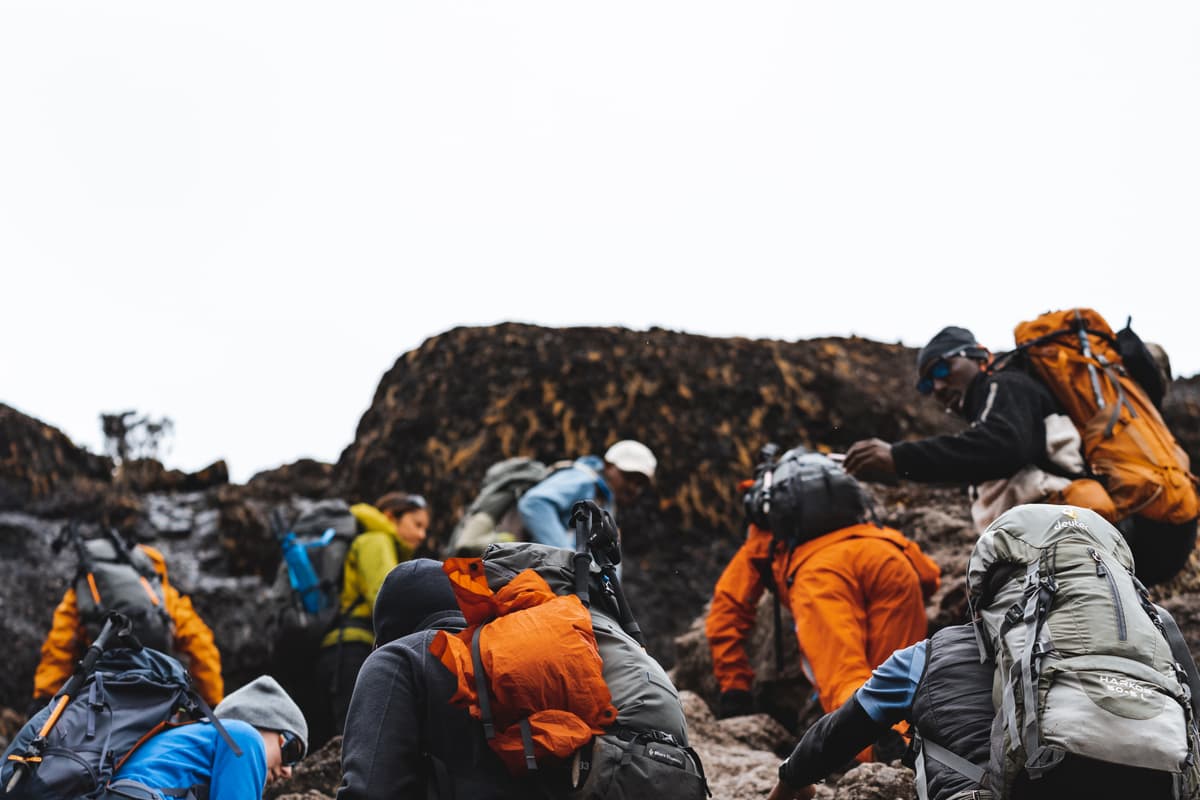
The day begins with the Barranco Wall — intimidating from below, but one of the most genuinely enjoyable sections of the whole climb. After the wall we cross rolling alpine desert to Karanga Camp for a relaxed hot lunch. On the 7-day itinerary the day ends here — the afternoon is free to rest, wash and recover. This overnight at Karanga is the key difference from the 6-day version.
A short but crucial day — a steady 3-hour ascent to Barafu Camp, followed by a full hot lunch and a thorough summit briefing from Priscus. Early dinner at 5:30pm; by 8:00pm you should be in your sleeping bag ahead of the midnight alarm.
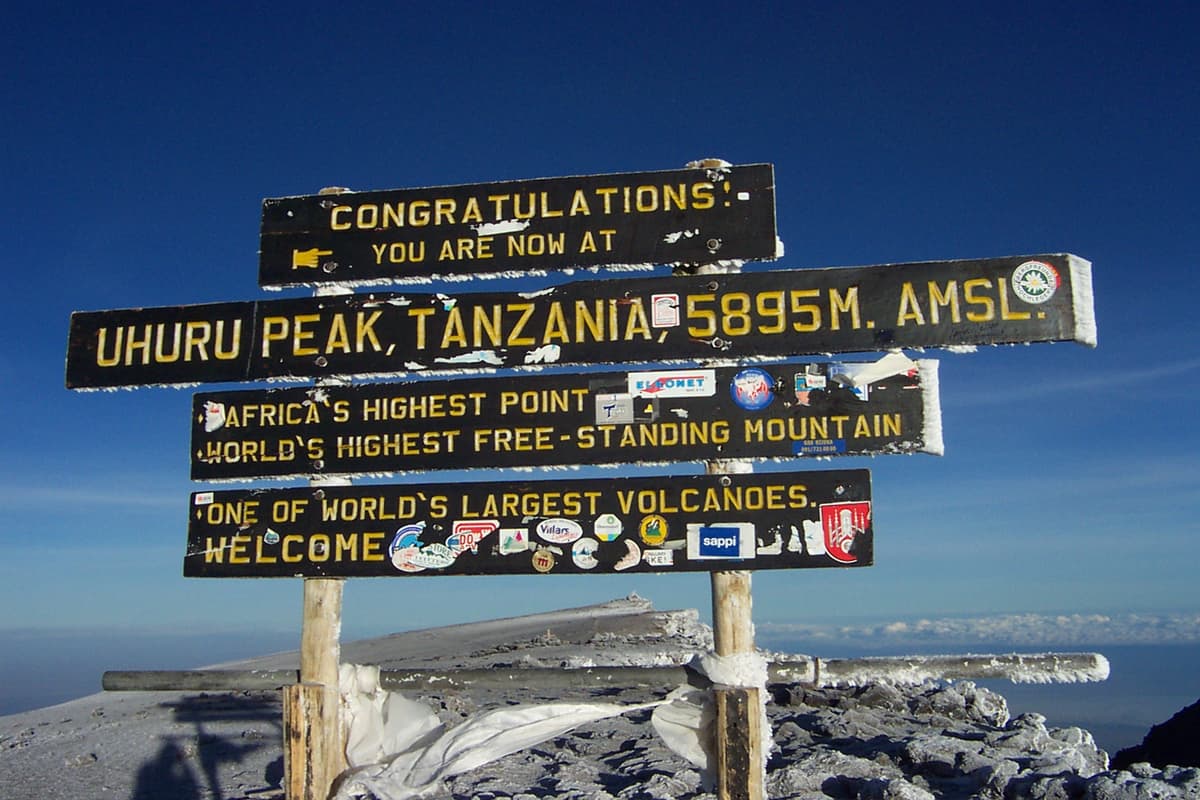
Wake at midnight, moving by 12:30am. The ascent to Stella Point on the crater rim (5,685m) is steep, cold and relentless, usually arriving around sunrise. From there it's roughly 45 minutes along the rim to Uhuru Peak — 5,895m, the Roof of Africa. After celebrating, we descend all the way to Mweka Camp for the tipping ceremony that evening.
The final descent through the same rainforest zone you entered on Day 1, now seen through very different eyes. Your official summit certificate is waiting at Mweka Gate, followed by the drive back to Moshi for a celebration at the hotel.
Where you'll stay
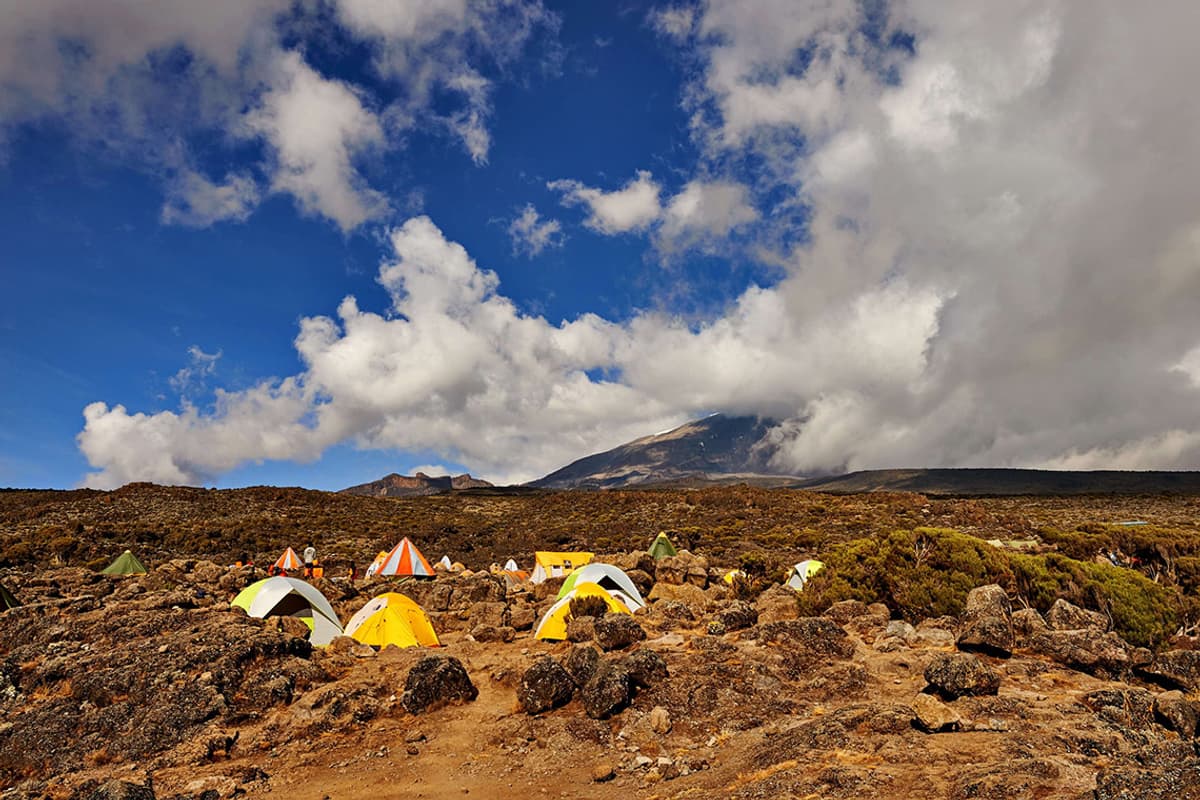
Crew moves ahead each day and has camp standing before you arrive. Sleeping mats provided; bring your own bag.
Kilimanjaro gallery
Complete pricing
| Group size | Total per person |
|---|---|
| 1 person | $2,150 |
| 2 people | $1,799 |
| 3–4 people | $1,749 |
| 5+ people | $1,699 |
What's included
- All Kilimanjaro National Park fees, conservation fees, camping fees, and rescue fees
- Airport pick-up and drop-off
- Hotel accommodation in Moshi (bed and breakfast)
- All meals on the mountain
- Professional certified lead guide and assistant guide(s)
- Experienced mountain cook and porters
- All camping equipment
- Transport between Moshi and the park gates
- Emergency oxygen cylinder and pulse oximeter health checks
- Group first aid kit
- All company taxes, permits, and government fees
- Official Kilimanjaro summit certificate
What's not included
- International flights and Tanzania visa fees
- Travel insurance (mandatory, must cover emergency evacuation)
- Personal climbing gear and clothing
- Sleeping bag (rentable in Moshi)
- Lunch and dinner at the hotel in Moshi
- Tips for guides, cook, and porters
- Personal snacks, drinks, and medication (incl. Diamox)
Why book with Perfect Kilimanjaro
Tailor-made, not off the shelf
Every itinerary is adjusted to your dates, pace and budget — this page is a starting point, not a fixed package.
Tanzanian guides, on staff
Local guides who have worked these parks and routes for years, employed by us rather than subcontracted per trip.
Private departures
Your vehicle and your group. We never add strangers to fill seats or combine bookings to cut our costs.
Stays we've slept in
Camps and lodges chosen from first-hand stays, not booked blind off a wholesale list.
One thread, start to finish
The same WhatsApp conversation from your first question to the day you fly home — usually answered within the hour.
Tell us your dates and group size
We'll confirm availability, send an exact per-person quote and a day-by-day plan within one business day. No deposit needed to get a quote.