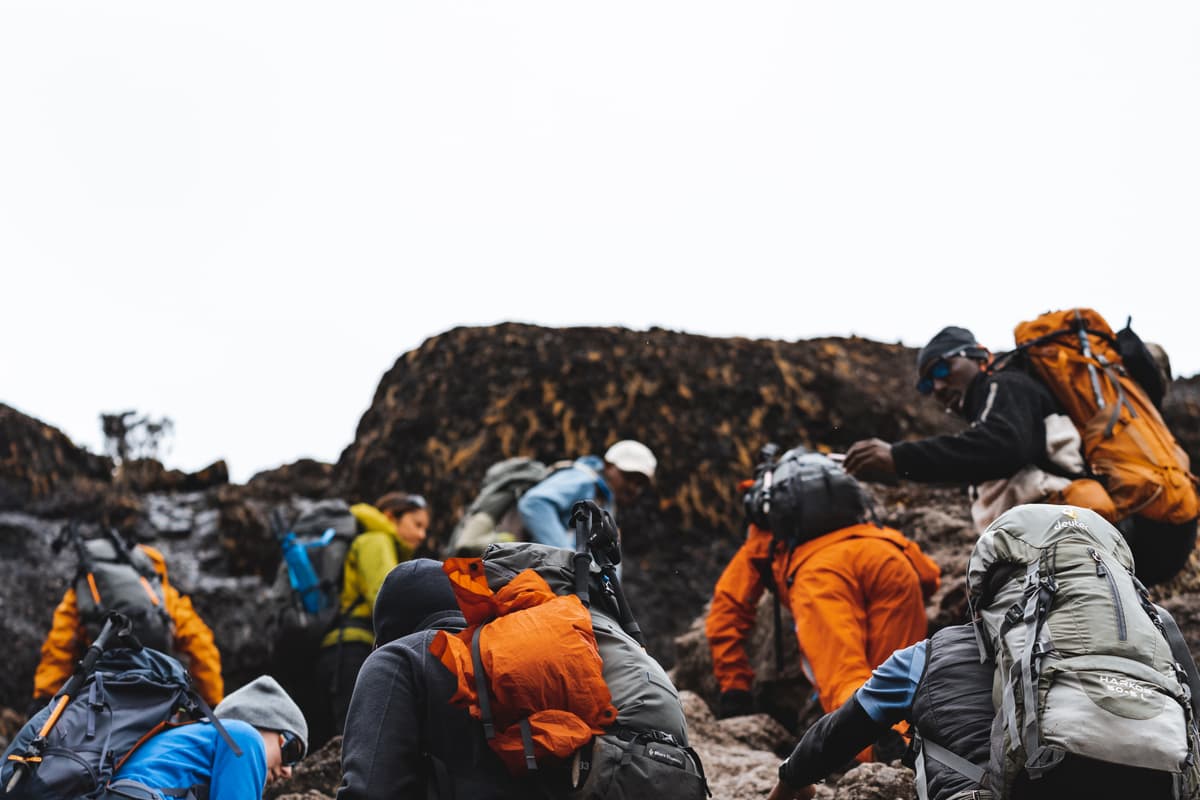
Most mountains have one climate. Kilimanjaro has five, stacked on top of each other like layers of a very tall cake — and on a standard six to nine day climb, you walk through every one of them.
1. Cultivation zone (800–1,800m)
You won't see much of this one as a climber — it's the farmland and villages around the base of the mountain, coffee and banana plantations mostly. Most routes start just above it, at the park gate.
2. Rainforest (1,800–2,800m)
The first day of walking on every route. Warm, humid, and genuinely a rainforest — thick canopy, colobus monkeys if you're lucky, and often a light drizzle. This is where your gear first gets tested against real weather.
3. Heather and moorland (2,800–4,000m)
The forest thins out fast and gives way to giant heather and the strange, otherworldly groundsel plants Kilimanjaro is known for. Temperatures drop noticeably, and the sun at altitude is far stronger than it feels.
4. Alpine desert (4,000–5,000m)
This is where most of your summit-approach camps sit. Rocky, dry, and sparse — little grows here, and nights regularly drop below freezing even though you're near the equator.
5. Arctic summit zone (5,000m+)
Ice, rock and snow. Temperatures on summit night commonly reach -15°C to -20°C with windchill. It's the shortest zone by distance but the one every itinerary is built around.
Knowing this ahead of time changes how you pack — you're not dressing for one climate, you're dressing for five, in the space of about five days.