Let me start with a quote that has stayed with me since I first read it.
“I inscribe the most perfect health I have always enjoyed in Africa to the fact that I have made every step of my journey on foot, the constant exercise keeping my body organs in shape.”
Those are the words of Hans Meyer, the German geographer who became the first European to summit Kilimanjaro in 1889. He credited his success to the fact that he had walked everywhere, consistently, for years. His body was prepared for what the mountain asked of it
After 14 years of guiding on Kilimanjaro, leading more than 350 groups to the summit as part of the Ngatambaku Mtui family’s three-generation legacy on this mountain, I believe Hans Meyer understood something that many modern climbers overlook entirely.
Fitness is not a guarantee on Kilimanjaro. But lack of fitness is almost always a problem.
The Honest Truth About Fitness and Kilimanjaro
“Kilimanjaro can be climbed by anyone.”
This is not entirely false. Kilimanjaro does not require ropes, technical climbing skills, or mountaineering experience. I have guided clients from age 9 to age 79. But “anyone can do it” has led many people to arrive completely unprepared. I want to tell you about one of them.
Why Fitness Matters More Than Most People Think
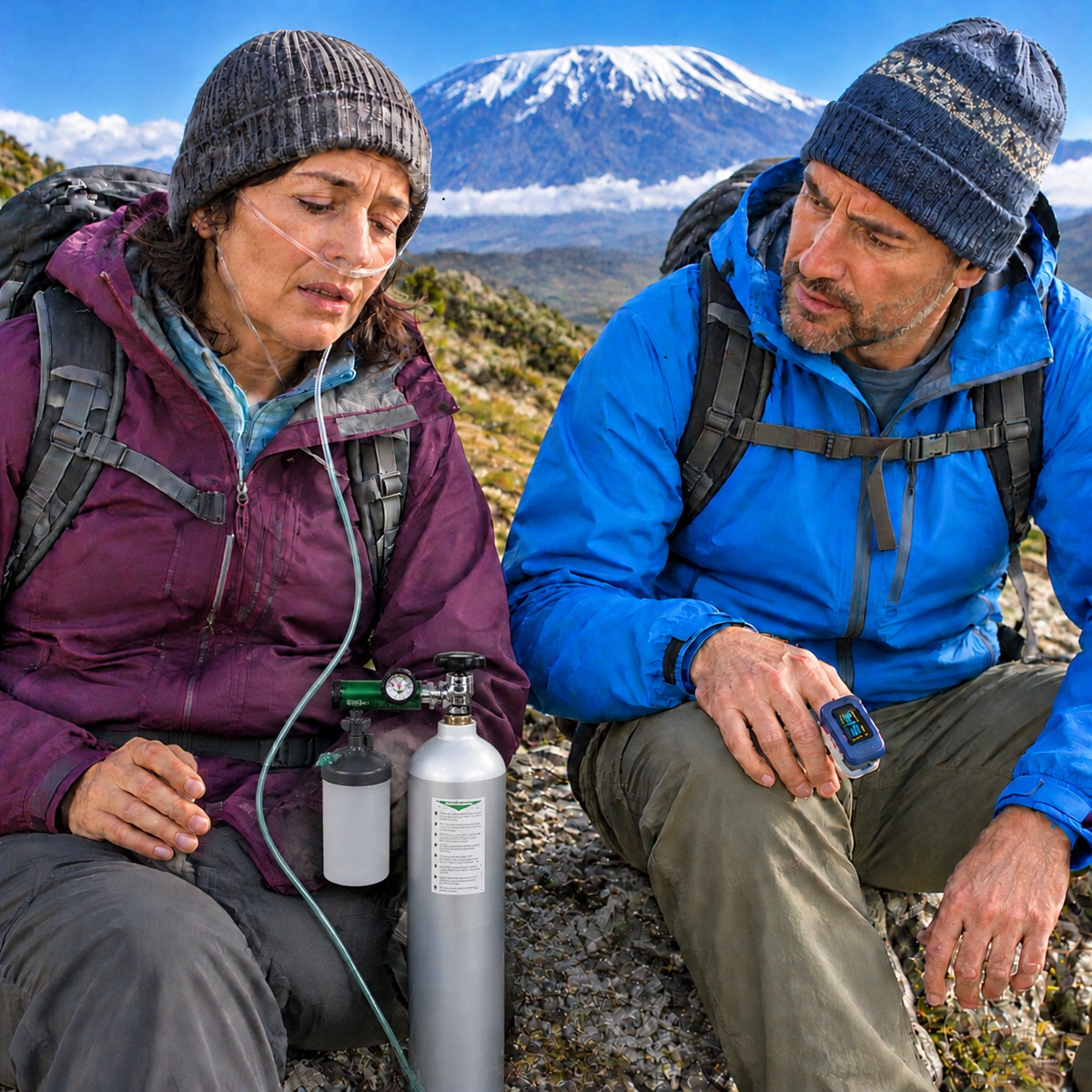
Breathing. When an unfit climber works hard on the trail, they pant. Their breathing becomes shallow and rapid. When you cannot breathe fully and deeply at altitude, you are not getting adequate oxygen into your bloodstream. Reduced oxygen at altitude is the underlying cause of altitude sickness. An unfit climber who is already oxygen-deprived from the effort of walking is starting from a worse position before altitude even begins to affect them.
Enjoyment. Kilimanjaro is one of the most extraordinary places on Earth. A client who is suffering, whose legs are burning and whose lungs are desperate, cannot enjoy any of it. A fit client walks with something left in reserve. They look around. They arrive at camp with energy to appreciate where they are.
How Much Training Do You Actually Need?
Category 1: Seasonal Mountain Hikers and Regular Campers. You already hike regularly and are comfortable sleeping in a tent. You know how to pace yourself across multiple days. What you need: Maintain your current level. In the final 4 to 6 weeks, increase your longest hike to 6 to 8 hours and carry a day pack of 7 to 10 kilograms. Time required: 4 to 8 weeks of specific preparation.
Category 2: Fit People Who Do Not Hike. You exercise regularly, whether you run, cycle, swim, or go to the gym. But long uphill walking on uneven ground with a loaded pack over multiple days is not part of your routine. What you need: Keep your existing cardio base. Add hiking progressively, starting with 2 to 3 hour hikes and building to 5 to 6 hours. Carry a loaded day pack. Practice walking slowly and steadily. Time required: 2 to 4 months of specific hiking preparation.
Category 3: Beginners, Little or No Regular Exercise. You live a largely sedentary life. You do not exercise regularly. What you need: Begin with basic cardio: walking, then brisk walking, then jogging. Reduce excess body fat. Stop smoking. Reduce alcohol. Add hiking progressively. Eventually add a loaded pack, longer distances, and rougher terrain. Time required: A minimum of 6 months. For some, a full year is more realistic.
A Note on Age: Clients over 55 should add at least 4 to 6 weeks to the suggested timelines and prioritise building endurance over speed.
What Kind of Training Should You Do?
Aerobic exercise. Walking on hills, jogging, cycling, swimming, stair climbing. Aim for approximately 70% of your maximum heart rate: breathing noticeably harder but still able to hold a conversation.
Leg strengthening at the gym. Squats, lunges, calf raises, step-ups, leg press, hamstring curls.
At home, without equipment:
Bodyweight squats: 3 sets of 15 to 20
Reverse lunges: 3 sets of 12 per leg
Wall sits: hold 45 to 60 seconds, repeat 3 times
Glute bridges: 3 sets of 15
Single leg calf raises on a step: 3 sets of 15 per leg
Step-ups on stairs with a loaded pack
Long hikes are the most important training you can do. No gym work fully replaces 6 to 8 hours on rough, uneven terrain with a loaded pack.
Progressive hiking plan:
Month 1: 2 to 3 hour hikes, light pack (3 to 4 kg)
Month 2: 3 to 5 hour hikes, pack 5 to 6 kg
Month 3: 5 to 6 hour hikes, roughest terrain available, pack 7 to 8 kg
Month 4: 6 to 8 hour hikes, pack 8 to 10 kg. At least one 2-day back-to-back hiking weekend.
Practice walking slowly. Pole pole is not just a Swahili phrase. It is the technique that gets people to the summit. The mountain demands deliberate, controlled slowness above 4,000 metres.
What About People Who Say They Did No Training and Still Summited?
People who summit without formal training are typically already very active in daily life, live at altitude, or are young and naturally fit. If you sit behind a desk for 8 hours a day and have not exercised consistently for years, comparing yourself to that person is the fastest route to standing at Barafu Camp with nothing left to give.
A Final Thought
At Perfect Kilimanjaro, I have watched something happen to clients who take their preparation seriously. They arrive in Moshi having changed their diet. Having stopped smoking. Having reduced alcohol. Having built a habit of hiking they intend to continue after the climb.
Let Kilimanjaro be the beginning of something, not just a destination.
Start training. Eat well. Get strong. Come to Tanzania ready to enjoy every single metre of this mountain. We will take care of the rest.
Priscus Peter Mtui
Lead Guide & Owner, Perfect Kilimanjaro