The 6-day Lemosho is our shortest version of this route — and I want to be upfront with you about what that means. You will experience everything that makes Lemosho special — the remote western approach, the Shira Plateau, the Barranco Wall, the Southern Circuit. But your body has less time to acclimatize than on the 7 or 8-day versions. This route is for experienced, well-prepared climbers who understand that trade-off and accept it. If you have any doubt, choose 7 or 8 days. The mountain will still be here.
— Priscus Peter Mtui, Lead Guide & Owner, Perfect Kilimanjaro
Recommended for
Overview
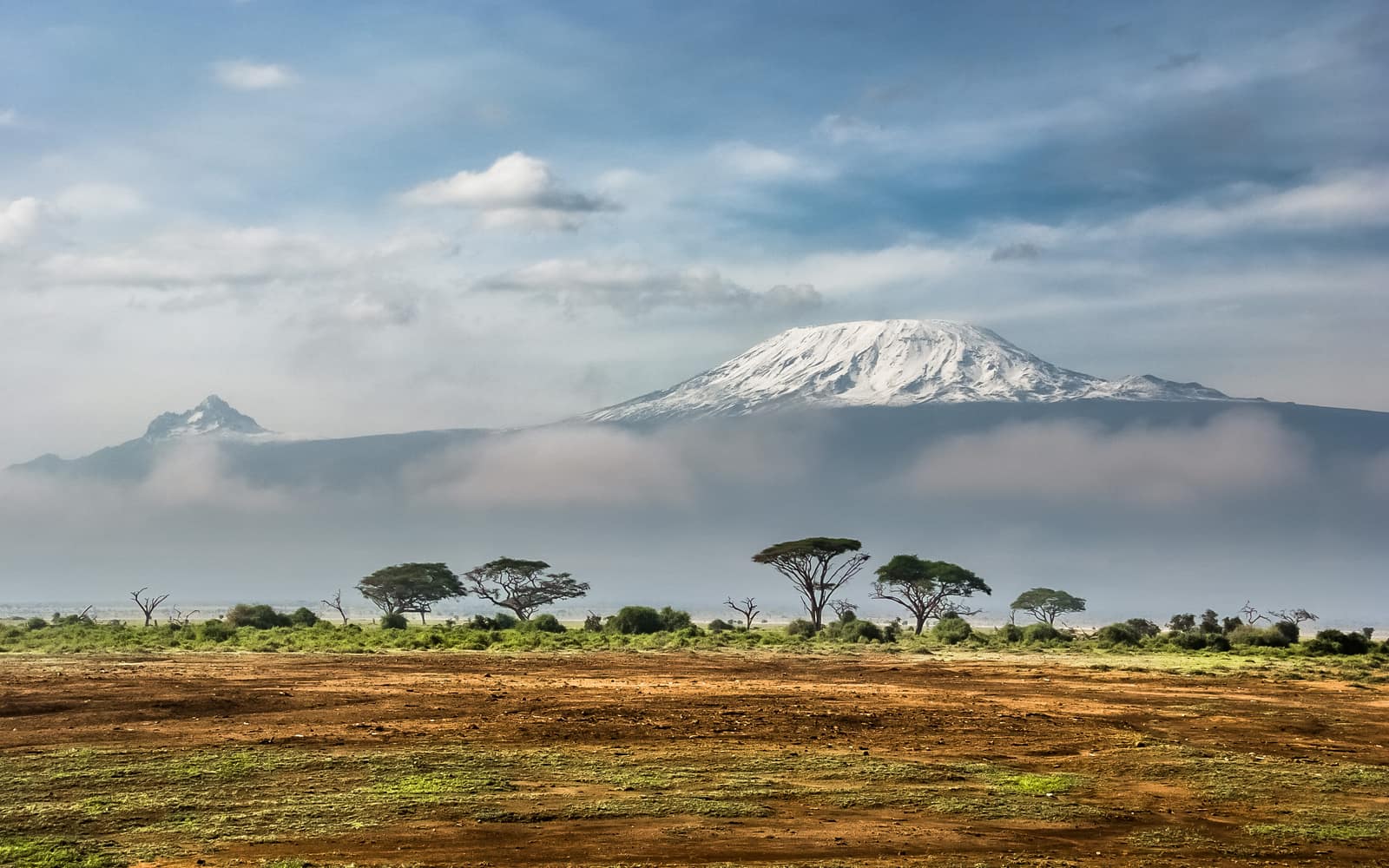
The Lemosho Route approaches Kilimanjaro from the remote western wilderness — far from the crowded southern gates, through pristine forest that very few tourists ever see. It crosses the ancient Shira Plateau, passes through every ecological zone on the mountain, and follows the spectacular Southern Circuit before the final ascent to Uhuru Peak. What makes Lemosho exceptional is the sheer variety of landscape it crosses in a short space of time. You begin in dense montane rainforest on the western slopes, home to Colobus monkeys and rare forest birds. Within two days you break out onto the vast, otherworldly Shira Plateau — the collapsed caldera of an ancient volcano — with sweeping views of Kibo's glaciers ahead of you. From there the route climbs to Lava Tower at 4,600 metres before dropping down to the sheltered Barranco Camp, the "climb high, sleep low" pattern that underpins acclimatization on every version of this route. The Southern Circuit that follows is a high traverse rewarding climbers with 360-degree views of the mountain, before the final push through Barafu Camp to Uhuru Peak. Because it starts at the remote Londorossi Gate on the western side, Lemosho sees significantly fewer climbers than the popular Machame and Marangu routes — a quieter, more personal experience on the mountain. Total distance ~66 km · Duration 6 days · Difficulty Challenging · Accommodation Camping · Summit success rate ~60% · Start Londorossi Gate · End Mweka Gate.
Kilimanjaro highlights
How this version compares
The Lemosho Route is available as a 6, 7, or 8-day itinerary at Perfect Kilimanjaro. The scenery, the camps, and the overall experience are the same across all three versions. The difference is entirely in pacing and acclimatization time.
Breaks the first section of the route into three gentle days — Big Tree Camp, then Shira 1, then Moir Hut — giving your body the most thorough acclimatization profile available.
Combines the first two days into one long effort — covering Big Tree Camp to Shira 2 Camp in a single demanding 18-kilometre day.
Goes further. Day 2 makes the same long crossing to Shira 2 Camp as the 7-day. But on Day 4, instead of stopping overnight at Karanga Camp, we continue directly from Karanga to Barafu Camp — combining what the 7-day version covers across two separate days into one longer push.
Choose this version if
- Experienced trekkers who regularly hike at altitude
- Climbers who have previously summited high peaks above 4,000 metres
- Those with very limited time and strong relevant experience
- Clients who have trained intensively and specifically for this climb
Choose the 7 or 8-day instead if
- First-time Kilimanjaro climbers
- Anyone coming from sea level
- Those over 60
- Families
- Anyone for whom the summit is the primary goal
- Anyone with limited trekking experience
Detailed itinerary
Your Perfect Kilimanjaro experience begins the moment you land at Kilimanjaro International Airport. Our driver will be waiting for you at the arrivals hall and will transfer you directly to your hotel in Moshi. In the evening you will meet Priscus or your assigned lead guide for a comprehensive pre-climb briefing. This covers the full 6-day itinerary, daily camp elevations, acclimatization strategy, altitude sickness recognition and prevention, emergency procedures, equipment requirements, and what to expect on summit night. We conduct your first health check this evening — measuring your blood oxygen saturation and resting heart rate to establish your personal baseline before you set foot on the mountain. This is standard Perfect Kilimanjaro practice on every climb, for every client. Because the 6-day version is the most compressed Lemosho itinerary we offer, we pay particular attention during this briefing to the client's fitness, altitude experience, and preparation. If any essential gear is missing or needs to be rented, your guide will direct you to trusted local rental options in Moshi. Arriving at least one full day before your climb is strongly recommended. Optional activities available on arrival day: Materuni Waterfall & Coffee Tour · Kikuletwa Hot Springs · Moshi Town Tour · Marangu Village Walk — visit the Ngatambaku Mtui family's home village.
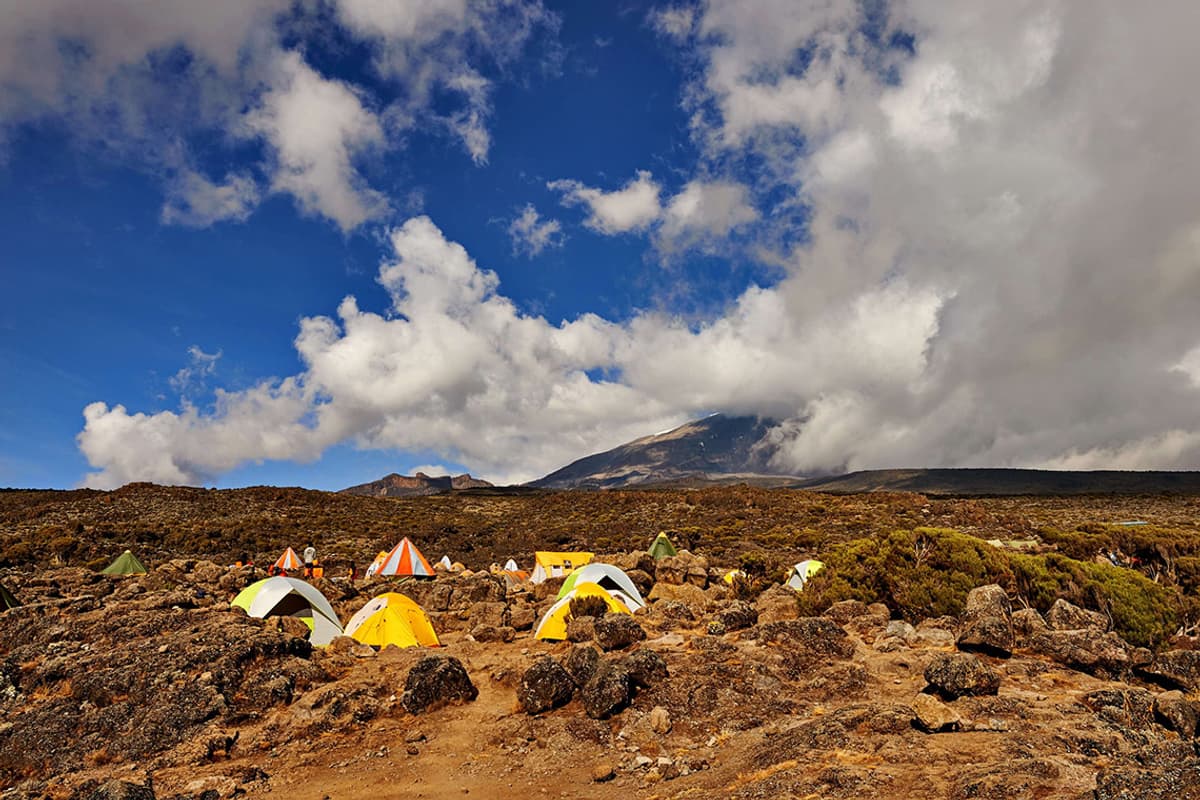
After breakfast at the hotel we make the three-hour drive from Moshi to Londorossi Gate on the remote western side of Kilimanjaro. At the gate we complete registration, collect permits, and enjoy a hot lunch before beginning our first steps on the mountain. The first day's hike is intentionally gentle — just 5 kilometres through the lower montane rainforest. On the 6-day route this rest day matters more than usual: tomorrow is the longest and most demanding day of the entire itinerary, and your body needs to arrive at Big Tree Camp as rested and well-fed as possible. The rainforest on the western approach is extraordinary and sees far fewer climbers than the southern routes. Colobus monkeys move through the canopy above you; rare forest birds call from the undergrowth. We arrive at Big Tree Camp — Mti Mkubwa in Swahili — in the early afternoon. Your tent is already standing, hot drinks are waiting, and your crew is preparing dinner. We conduct an evening health check and prepare carefully for the long day ahead.
This is the day that defines the 6-day Lemosho experience. We leave Big Tree Camp after breakfast and climb steeply through the upper rainforest, the canopy gradually thinning as we gain altitude and the trail opens into wide moorland — one of the most dramatic transitions on the whole mountain. We climb to Shira Ridge, where Kilimanjaro reveals itself for the first time. The trees are gone, and ahead — impossibly large and white against the sky — is Kibo, the summit dome. Many clients pause here for a long moment before moving on. We descend gently to Shira 1 Camp at 3,500 metres for lunch — an important rest point. After lunch we continue across the Shira Plateau, the ancient collapsed caldera of a volcano, a vast expanse of open moorland stretching wide at over 3,700 metres, golden and open in the afternoon light with the summit rising dramatically ahead. We arrive at Shira 2 Camp at 3,850 metres in the late afternoon or early evening. Evening health check, a hot dinner, and overnight at Shira 2 Camp.
This is the single most important acclimatization day of the entire climb. We leave Shira 2 Camp at 3,850 metres and climb steadily toward Lava Tower, a dramatic volcanic formation at 4,600 metres — a substantial 750-metre gain. The terrain grows increasingly barren, the last moorland plants giving way to volcanic rock, dust, and open scree. You are above 4,000 metres for the first time today. Many clients feel it — a slight heaviness in the legs, a mild headache, a sense of thinner air. This is normal: your body registering the altitude and beginning to adapt. We stop at Lava Tower for lunch and a rest of approximately one hour, then descend 650 metres to Barranco Camp at 3,950 metres through the remarkable Senecio Forest, its giant groundsels rising from the rocky ground in the afternoon light. Tonight you sleep 650 metres lower than the altitude your body reached today — on the 6-day route this acclimatization day carries extra weight, since you do not have the additional Karanga overnight built into the 7-day version. Evening health check, dinner, and overnight at Barranco Camp.
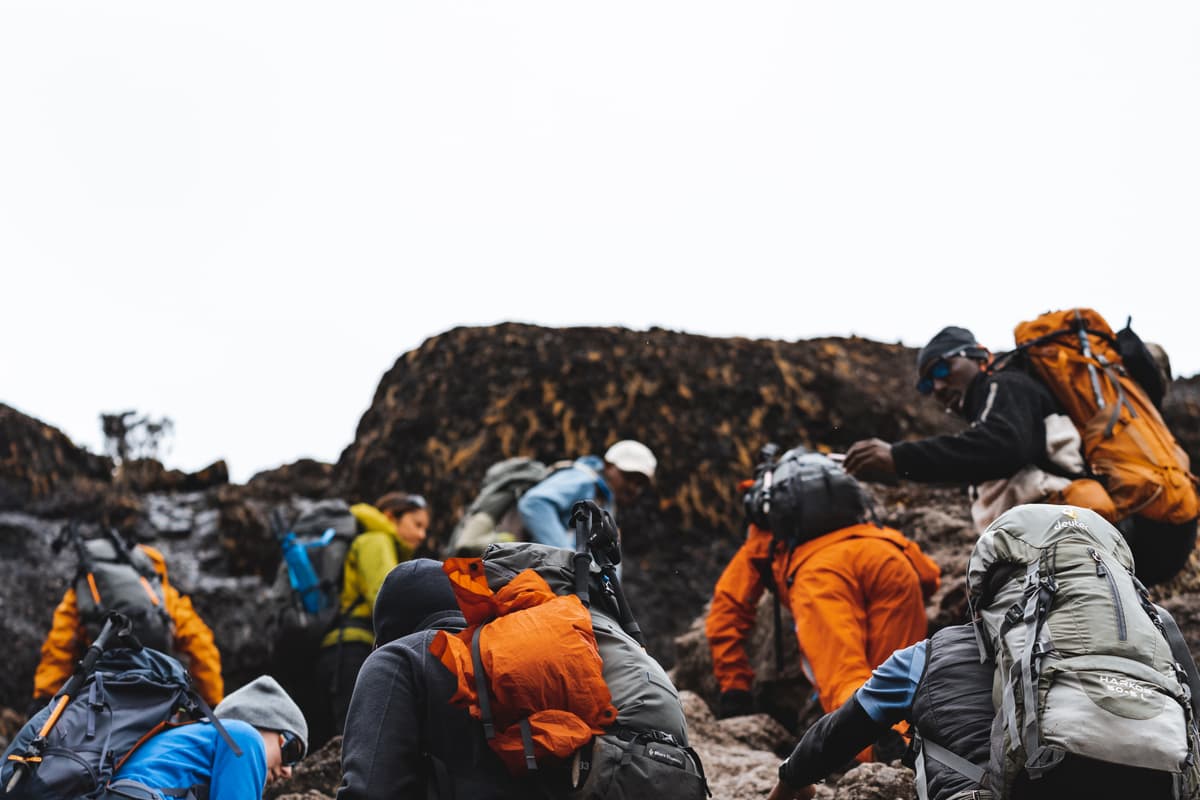
This is where the 6-day Lemosho diverges most from the 7-day version, and it asks the most of you physically and mentally. We begin with the Barranco Wall — imposing from below, but in practice a hands-on scramble most clients genuinely enjoy, steep and requiring focus but not technical. Most clients reach the top with big smiles and extraordinary views back across Barranco Camp and up toward a summit that suddenly feels close. After the wall we cross rolling alpine desert to Karanga Camp at approximately 4,000 metres for a full hot lunch and a real rest. On the 7-day Lemosho, Karanga is where the day ends, with an overnight acclimatization stop. On the 6-day, after lunch and rest, we continue. The afternoon section from Karanga to Barafu covers roughly 4 kilometres and 2 to 3 hours of steady climbing through open, windswept alpine desert as the summit zone closes in above. We arrive at Barafu Camp at 4,673 metres in the late afternoon, tired from a day that began at the Barranco Wall and ends at base camp. Dinner is served at 5:00pm. Your summit-night gear is laid out and ready. By 7:00pm you should be in your sleeping bag — the midnight alarm comes in five hours.
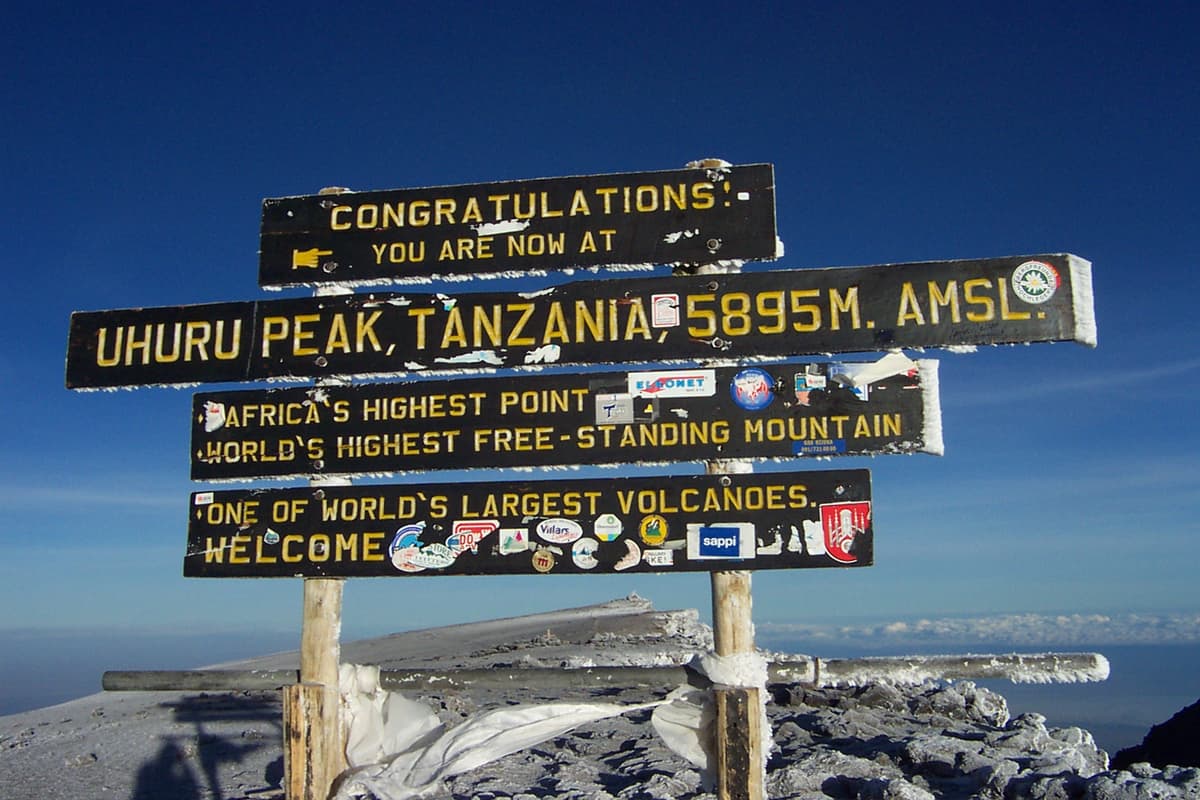
This is the day. At midnight we wake you; tea and light snacks are prepared while you dress in every layer you have brought. Headlamps on. By 12:30am we are moving. The ascent from Barafu to the crater rim is steep, cold, and relentless — loose volcanic scree shifting under every step. Plant your pole, move one foot forward, breathe, then the other foot. Your guide is with you every step, watching your pace, breathing, and movement continuously. We reach Stella Point on the crater rim at approximately 5,685 metres, usually around sunrise — the glaciers of Kilimanjaro visible from above the cloud layer for the first time. From Stella Point we follow the crater rim for roughly 45 minutes to Uhuru Peak, 5,895 metres above sea level. The Roof of Africa. After celebrating at the summit we begin the long descent — first back to Barafu Camp for rest and lunch, then continuing all the way down to Mweka Camp at 3,100 metres for the night. The tipping ceremony takes place at Mweka Camp this evening, as the crew gathers, sings, and celebrates your summit with you.
The final morning. Legs are tired and well-earned. We descend through the rainforest — the same ecological zone you entered on Day 1, now seen through completely different eyes. We arrive at Mweka Gate at approximately midday, where your official Kilimanjaro summit certificate is waiting — signed, stamped, and entirely earned. We drive back to Moshi for a celebration at the hotel: hot shower, cold drink, and a meal you did not have to carry up a mountain. A Perfect Kilimanjaro team member will sit with you for a brief debrief — your feedback matters to us, and any onward arrangements such as safari, Zanzibar, or additional Moshi activities can be confirmed on this day.
Kilimanjaro gallery
Complete pricing
| Group size | Park fees | Other costs | Total per person |
|---|---|---|---|
| 1 Person | $830 | $1,219 | $2,049 |
| 2 People | $827 | $912 | $1,739 |
| 3–4 People | $824 | $865 | $1,689 |
| 5+ People | $823 | $766 | $1,589 |
What's included
- All Kilimanjaro National Park fees, conservation fees, camping fees, and rescue fees
- Airport pick-up and drop-off at Kilimanjaro International Airport
- Hotel accommodation in Moshi — bed and breakfast — one night before and one night after the climb
- All meals on the mountain
- Professional certified lead guide and assistant guide(s)
- Experienced mountain cook
- Porters — equipment carried professionally throughout
- All camping equipment
- Transport from Moshi hotel to Londorossi Gate and from Mweka Gate back to hotel
- Emergency oxygen cylinder — carried on every Perfect Kilimanjaro climb, no exceptions
- Pulse oximeter health checks — twice daily from Day Zero
- Group first aid kit and emergency procedures
- All company taxes, permits, and government fees
- Official Kilimanjaro summit certificate on completion
What's not included
- International flights to and from Tanzania
- Tanzania visa fees — currently $50 USD for most nationalities
- Travel insurance — mandatory — must include emergency evacuation and mountain rescue coverage
- Personal climbing gear and clothing
- Sleeping bag — can be rented in Moshi
- Lunch and dinner at the hotel in Moshi
- Tips for guides, cook, and porters
- Personal snacks and drinks beyond what is provided
- Medical vaccinations and personal medication, including Diamox
Tipping guide
| Crew member | Recommended tip per day |
|---|---|
| Porters | $6 – $10 |
| Cook & Assistant Guides | $15 – $20 |
| Lead Guide | $20 – $25 |
Tipping is not mandatory but is highly appreciated and depends on your satisfaction with the service.
Optional extras
- Private Portable Toilet — $100 per group
- Extra Hotel Night in Moshi (pre- or post-climb)
- Pre- and Post-Climb Activities: Materuni Waterfall & Coffee Tour · Kikuletwa Hot Springs · Moshi Town Tour · Marangu Village Walk
- Safari & Zanzibar Extensions: Serengeti National Park · Ngorongoro Crater · Zanzibar
A note from Priscus
I will be honest with you — as I always am.
The 6-day Lemosho Route has a summit success rate of approximately 60%. That means roughly four out of every ten clients who choose this itinerary do not reach Uhuru Peak. That is not a number I am comfortable presenting without being clear about what it means.
It does not mean the route is bad. It means the route is demanding and the acclimatization window is tight. Two significant rest points available on longer versions — the overnight at Moir Hut on the 8-day and the overnight at Karanga on the 7-day — are not part of this itinerary.
If you choose the 6-day Lemosho, choose it because your experience, your fitness, and your altitude history genuinely support it — not because the price is lower or the time commitment is shorter.
If you contact me and describe your fitness level, your trekking history, and your altitude experience, I will give you my honest personal recommendation. I would rather tell you to choose a longer route than watch you turn back below the summit of a mountain you worked hard to reach.
The Ngatambaku Mtui family has guided on Kilimanjaro for three generations. Every client matters to us personally. That includes you.
— Priscus Peter Mtui
Lead Guide & Owner, Perfect Kilimanjaro
The Ngatambaku Mtui Family · Marangu Village · Moshi, Tanzania
Why book with Perfect Kilimanjaro
Tailor-made, not off the shelf
Every itinerary is adjusted to your dates, pace and budget — this page is a starting point, not a fixed package.
Tanzanian guides, on staff
Local guides who have worked these parks and routes for years, employed by us rather than subcontracted per trip.
Private departures
Your vehicle and your group. We never add strangers to fill seats or combine bookings to cut our costs.
Stays we've slept in
Camps and lodges chosen from first-hand stays, not booked blind off a wholesale list.
One thread, start to finish
The same WhatsApp conversation from your first question to the day you fly home — usually answered within the hour.
Tell us your dates and group size
We'll confirm availability, send an exact per-person quote and a day-by-day plan within one business day. No deposit needed to get a quote.